
 admin
admin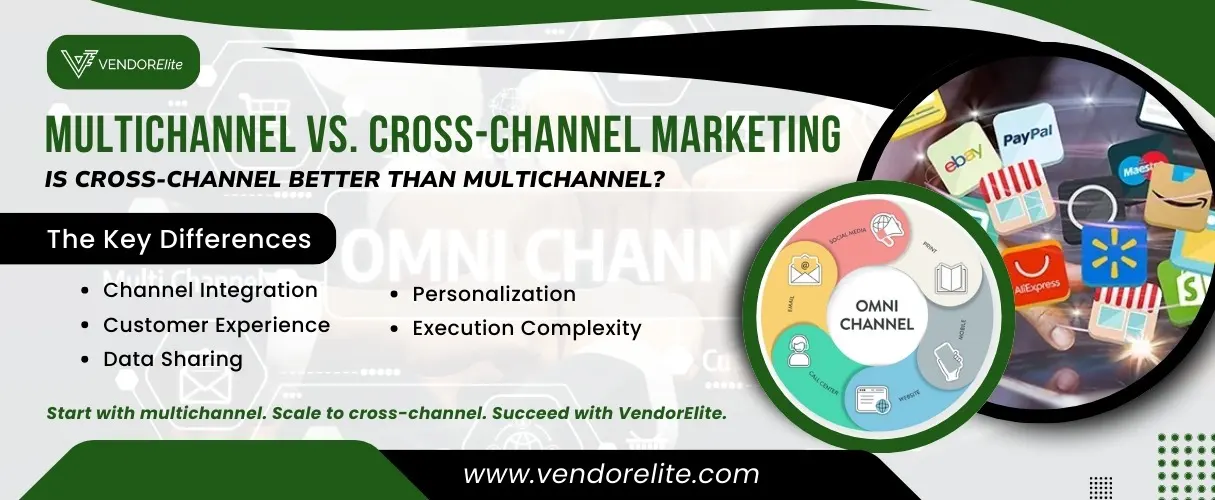
Visit Us: https://www.vendorelite.com
In today’s hyper-connected ecommerce world, businesses are expected to meet customers where they are and that’s often on more than one platform. Enter the concepts of multichannel and cross-channel marketing. While these terms are often used interchangeably, they differ significantly in how they approach communication and customer engagement.
If you’re building a powerful multichannel ecommerce strategy with platforms like VendorElite, understanding the difference between these two methods is critical to maximizing visibility, personalizing engagement, and increasing ROI.
What is Multichannel Marketing?
Multichannel marketing means connecting with customers across several channels – like email, SMS, mobile push notifications, social media, or even physical stores – but each channel operates independently. These campaigns aim to maximize brand exposure and allow customers to choose how they engage.
However, each channel typically runs its own campaigns, meaning there’s little to no interaction or data sharing between them. For example, your email strategy might not reflect what a customer recently did on your mobile app or in-store.
What is Cross-Channel Marketing?
Cross-channel marketing is a more integrated approach. It still uses multiple communication channels, but connects them, enabling data to flow between touchpoints. The result is a seamless, personalized customer experience – where the journey can start on one channel and continue fluidly on another.
For example, if a user browses a product on your app but doesn’t purchase, they might receive a follow-up email with product suggestions based on their browsing history. Every touchpoint is informed by the last.
Key Differences Between Multichannel and Cross-Channel Marketing
Let’s explore how these two strategies compare on various fronts:
-
Channel Integration
- Multichannel: Channels work separately. Each touchpoint is managed independently.
- Cross-Channel: Channels are interconnected. One interaction influences the next.
-
Customer Experience
- Multichannel: The customer might receive inconsistent messaging across channels.
- Cross-Channel: Offers a consistent and cohesive experience, improving satisfaction and loyalty.
-
Data Sharing
- Multichannel: Data is often siloed by channel.
- Cross-Channel: Data is shared between channels to inform messaging and offers.
-
Personalization
- Multichannel: Targeted per channel – what works best for email might differ from social.
- Cross-Channel: Personalized per customer. Their behavior across all touchpoints shapes the experience.
-
Execution Complexity
- Multichannel: Easier to set up; suitable for businesses starting their digital outreach.
- Cross-Channel: Requires integration, analytics, and automation tools — more complex but more rewarding.
Examples of Multichannel Marketing
You may already be doing multichannel marketing without realizing it:
- Posting an offer on Instagram and sending the same via email.
- Sending push notifications about flash sales while also promoting them on your website.
- Mailing flyers to local customers while also running digital ads.
Each channel drives traffic individually, but they don’t necessarily “talk” to each other.
Examples of Cross-Channel Marketing
Cross-channel efforts require coordination across platforms:
- A customer abandons a cart in your mobile app and receives an email reminding them to complete the purchase.
- Product recommendations on your site reflect what users browsed or purchased in-store.
- An SMS promotion is triggered based on user behavior in a previous email campaign.
This level of personalization requires deeper customer journey mapping, unified data, and automation – all of which VendorElite makes easier.
Is Cross-Channel Better Than Multichannel?
Not necessarily. It depends on your brand’s current goals and resources.
- Multichannel marketing is perfect for expanding reach and brand awareness across different platforms, especially if you’re targeting diverse demographics. It’s simple, effective, and doesn’t require full integration.
- Cross-channel marketing, on the other hand, offers a richer, more consistent customer experience. It’s more advanced and data-driven and often results in higher conversions, better retention, and stronger customer relationships.
The best ecommerce brands often start with multichannel and gradually evolve into cross-channel strategies as they scale.
Unlock Seamless Multichannel Ecommerce with VendorElite
Whether you’re managing orders on Amazon, syncing inventory with Shopify, or scheduling campaigns across platforms, VendorElite gives you the tools to streamline it all. Our platform is built to power multichannel ecommerce and sets the foundation for advanced cross-channel engagement.
With real-time analytics, automation workflows, and centralized data management, you can manage all your sales channels under one roof and deliver consistent customer experiences across the board.
Start with multichannel. Scale to cross-channel. Succeed with VendorElite.
Tags: Multichannel Marketing, Cross-Channel Marketing, Ecommerce Marketing, Multichannel Vs Cross-Channel Marketing, Difference Between Multichannel And Cross-Channel Marketing, Cross-Channel Marketing Examples, Multichannel Marketing Examples, Ecommerce Customer Journey, Ecommerce Growth, Multichannel Ecommerce, Ecommerce Automation, Digital Marketing Strategy